
Healthcare organizations are extremely disciplined when it comes to managing medical supplies. They closely track usage, control costs, and standardize purchasing because these items are used every day and viewed as essential. However, that same level of attention often doesn’t carry over to medical equipment and furnishings; that gap can quietly create significant long-term costs.
To put it simply, hospitals are very good at managing the things they throw away, but not always as good at managing the things they keep for years.
Unlike disposable supplies, equipment and furnishings like recliners, bassinets, carts, and patient room furniture, are long-term investments. They are part of the physical environment where care happens every day and are often the largest factors in patient comfort and satisfaction. Despite this, these products are often purchased as if they are one-time decisions, driven by appearance, immediate need, or designer preferences rather than long-term performance, total cost, or replacement rates. This leads to inconsistent choices, higher maintenance needs, and more frequent replacements than expected.
This issue shows up most clearly in three situations…
During Capital Projects, decisions are made quickly to meet deadlines, and long-term durability or standardization can be overlooked.
In Surge Situations, like a pandemic or patient spikes, speed matters most, so equipment is purchased quickly without much planning.
During Replacement Cycles, items are often swapped out as they break, rather than through a coordinated, system-wide plan.
In simple terms, decisions are often made for “right now” instead of “over the next 5–10 years.” Clinical staff and designers play an important role in choosing equipment, ensuring it is comfortable, safe, and supports patient care. But without also considering how long products will last, how much they cost to maintain, and how they fit into a larger system, organizations can unintentionally lose control of long-term costs.
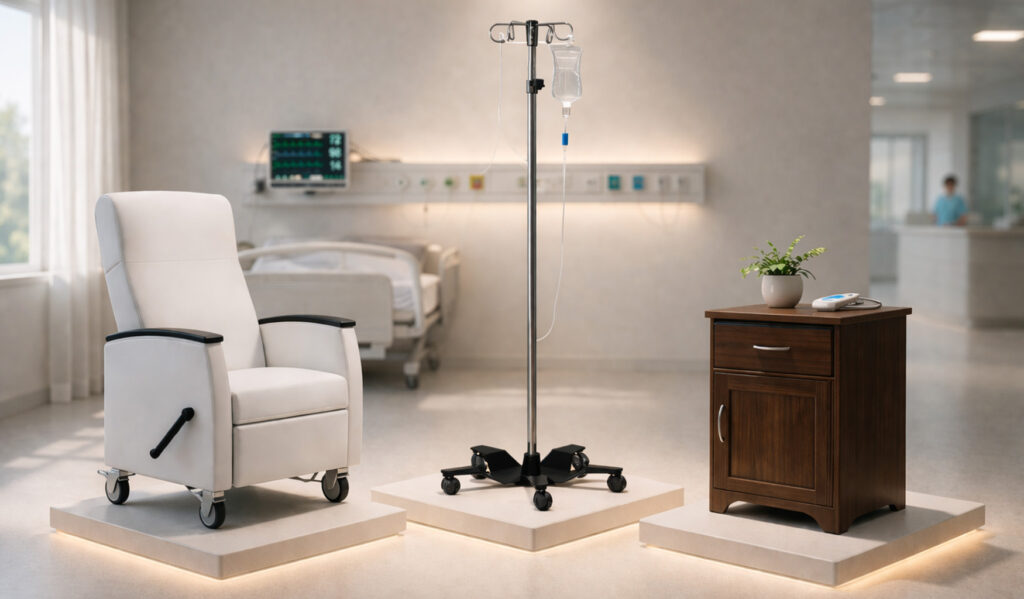
The healthcare systems that perform best financially take a different approach. They treat equipment and furnishings as infrastructure; something that needs planning, consistency, and long-term thinking. This includes standardizing products across locations, planning for replacement before things fail, and choosing equipment built for durability and repeat use.
When organizations make this shift, the benefits are clear: more predictable budgets, fewer maintenance issues, more consistent patient experiences, and better overall value from their investments.
At its core, the message is simple: the environment where care happens matters just as much as the supplies used within it. Managing both with the same level of discipline can make a major difference over time. Novum Medical Products is built to support exactly this kind of approach. With durable, long-lasting equipment, flexible design options that integrate seamlessly into existing environments, and the ability to set up blanket ordering programs for planned replacements, Novum helps healthcare systems move from reactive purchasing to proactive, long-term strategy. Instead of solving today’s need alone, Novum enables organizations to plan ahead, standardize across facilities, and reduce variability, turning a common blind spot into a controlled, predictable advantage.